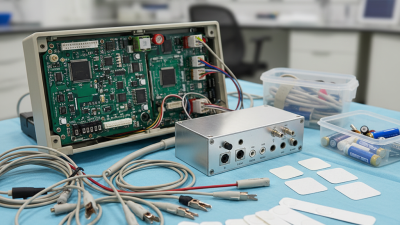
An electrocardiogram (ECG) machine is pretty much essential when it comes to keeping tabs on heart health. Honestly, understanding its main parts is really important if you want to use it effectively. So, let’s break down the key components—like electrodes, lead wires, and the display screen—because each one has a vital job in capturing and making sense of your heart signals.
The electrodes are the little sensors that detect electrical impulses from your heart and send that info through the lead wires to the machine. Getting this step right is super important—if there’s a hiccup here, the readings can be off, which isn’t good. Then you’ve got the display screen, which shows real-time data, giving doctors and techs a clear picture of what’s happening inside.
All these parts need to work together smoothly—otherwise, the whole monitoring process could be compromised. Also, it’s worth mentioning that keeping the machine’s parts in good shape is just as crucial as reading the data. Regular maintenance and checks can catch issues before they turn into bigger problems. And of course, having some training or experience helps a lot — interpreting results accurately is key.
In the end, the more you understand about each component, the better you’ll get at using the ECG machine. That knowledge not only boosts your confidence but also can mean better care for patients in the long run.
Introduction to Electrocardiogram Machines
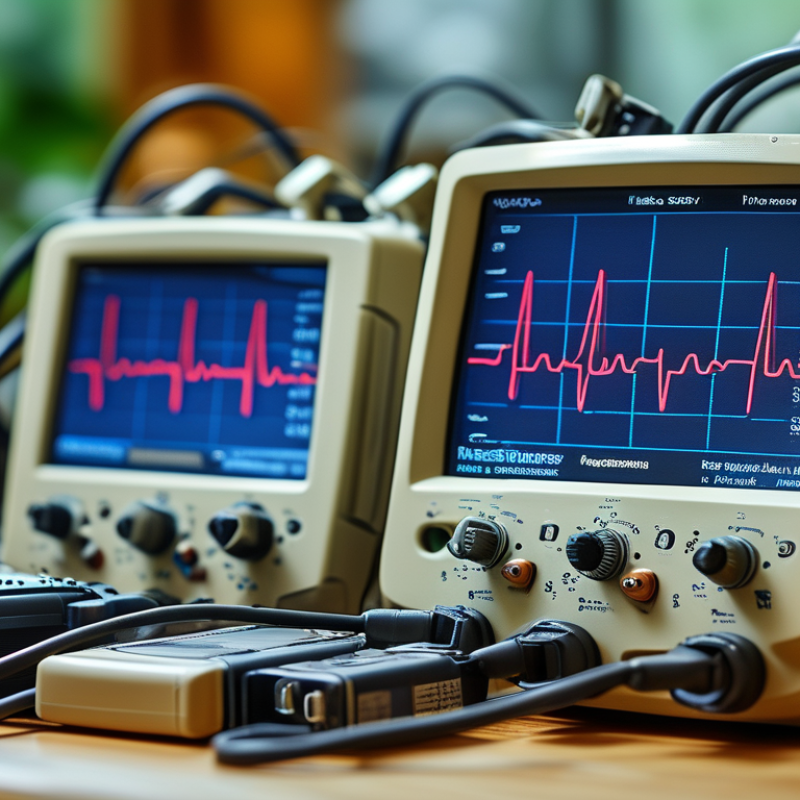
Electrocardiogram (ECG) machines play a crucial role in heart health assessment. They provide vital information about the electrical activity of the heart. By recording this activity, healthcare professionals can diagnose various cardiac conditions. An ECG machine captures the heart's rhythm, rate, and overall electrical function.
Understanding the essential components of an ECG machine can enhance its usage. Key parts include electrodes, which attach to the skin. They detect electrical signals produced by the heart. These signals are then transmitted to the ECG machine for analysis. The machine displays the data on a monitor or printout. This information helps doctors determine if a patient has arrhythmias or other heart issues.
It’s important to reflect on the machine's limitations too. While ECG machines offer valuable insights, they cannot catch every heart condition. Sometimes, further testing is necessary for a complete diagnosis. Additionally, proper electrode placement is crucial for accurate readings. Inaccurate positioning can lead to misleading results, highlighting the importance of trained technicians.
Basic Principles of Electrocardiography
Electrocardiography (ECG) is essential for diagnosing heart conditions.
The basic principle involves measuring the electrical activity of the heart. Each heartbeat generates electrical impulses that can be recorded by an electrocardiogram machine. These signals reveal the heart's rhythm and can indicate issues like arrhythmias or myocardial infarction.
Research shows that timely ECG analysis can improve patient outcomes. A report by the American Heart Association indicates that early detection of cardiac issues can reduce mortality rates by up to 25%. Furthermore, an electrocardiogram machine can provide data in real-time, giving healthcare providers immediate insight into a patient's status. However, despite technological advances, human error still exists in interpreting ECG data.
Understanding the nuances of an electrocardiogram is vital. Healthcare providers face challenges when distinguishing between normal variations and potential pathologies. The integration of advanced diagnostic tools, similar to a CNC machine's precision in manufacturing, can assist in minimizing errors. Yet, it is crucial for clinicians to communicate findings clearly. This reliance on technology should not overshadow the importance of clinical judgment in evaluating results.
Key Components of an Electrocardiogram Machine
An electrocardiogram (ECG) machine is crucial in diagnosing heart conditions. Its key components include electrodes, amplifiers, and a display unit. The electrodes attach to the patient’s skin, capturing electrical signals from the heart. According to the American Heart Association, accurate placement of these electrodes is vital for reliable readings. Proper attachment can influence detection rates of heart abnormalities significantly.
Amplifiers in the ECG machine enhance these signals. They boost the weak electrical impulses for better visibility on the display. Research indicates that high-quality amplifiers improve the clarity of ECG readings, aiding in precise diagnoses. The display unit presents the processed signals as waveforms, allowing physicians to interpret heart activity effectively.
Despite advancements, issues still exist. Misinterpretation of waveforms occurs often, even with modern technology. A study noted that nearly 25% of ECG results might lead to misdiagnosis. Training healthcare professionals in ECG interpretation remains critical. Continuous education can enhance accuracy and patient outcomes. This emphasizes the importance of combining technology with human expertise in healthcare settings.
Understanding Electrodes and Their Functions
Electrodes are essential components of an electrocardiogram (ECG) machine. They help capture the electrical signals generated by the heart. These signals are vital for assessing heart health. Understanding their functions can enhance your knowledge of cardiac monitoring.
There are different types of electrodes. Each type serves a specific purpose, like monitoring rhythm and detecting abnormalities. Adhesive electrodes are commonly used in clinical settings. They provide a stable connection to the skin. This contact is crucial for accurate readings. Nevertheless, skin irritations can affect their performance. Regular monitoring is necessary to ensure effectiveness.
Proper placement of electrodes is also important. Incorrect positioning can lead to misleading results. Improperly placed electrodes may capture noise instead of the heart's electrical activity. Training and experience in electrode application are essential for healthcare professionals. They must continually refine their techniques to minimize errors.
What are the Essential Parts of an Electrocardiogram Machine? - Understanding Electrodes and Their Functions
| Part |
Function |
Description |
| Electrodes |
To detect electrical activity |
Placed on the skin to measure heart electrical signals. |
| Lead Wires |
Transmit signals to the machine |
Connect electrodes to the ECG machine to transfer collected data. |
| ECG Machine |
Processes heart signals |
Converts electrical activity into a readable ECG waveform. |
| Display Screen |
Visual representation of data |
Shows real-time ECG waveforms and heart activity. |
| Paper Printout |
Provides a physical copy of results |
Produces a hard copy of the ECG for analysis and storage. |
| Power Supply |
Sustains operation |
Provides electrical power necessary for the machine's operation. |
Significance of the Amplifier in ECG Machines
The amplifier is a critical component of an electrocardiogram (ECG) machine. It enhances the tiny electrical signals produced by the heart. These signals are weak, often just millivolts. Without an effective amplifier, the data would be indecipherable. A well-designed amplifier can provide a clear and accurate representation of heart activity.
An essential aspect of the amplifier is its ability to filter noise. External interference can distort the readings. For instance, electrical devices around the ECG machine may introduce unwanted signals. A reliable amplifier minimizes this noise, allowing for precise heart monitoring. Patients deserve accurate results, and a poor amplifier can compromise this quality.
However, not every amplification method is perfect. Designers must balance gain and bandwidth. Too much gain can lead to signal distortion. Conversely, a narrow bandwidth may miss vital information. Striking this balance is often challenging. Continuous testing and refinements are essential. The importance of quality in ECG equipment cannot be overstated, as patient outcomes depend heavily on its reliability. Further research and innovation in amplifier technology are necessary to enhance precision in heart diagnostics.
Data Processing and Interpretation in ECG Devices
Data processing and interpretation are critical components of electrocardiogram (ECG) devices. These machines collect electrical signals from the heart, which can reveal critical health information. The challenge lies in how this data is processed. Automated algorithms analyze signals to identify patterns. However, not all devices have the same accuracy. Mistakes can lead to misinterpretations, which could have serious consequences for patient care.
Interpreting ECG results requires both technology and human expertise. Trained professionals need to review the processed data. They look for irregularities in the heart's rhythm. Machine output can sometimes mislead without expert review. This collaboration between advanced data processing and expert interpretation is essential. For instance, an abnormal reading might be flagged by the ECG device, but a professional may need to confirm its significance.
These machines can certainly help in diagnosis, yet they are not infallible. It's vital to recognize their limitations and enhance the data processing systems continually. In this context, understanding the nuances of ECG signals can improve outcomes. The development of more refined algorithms mimics the adaptability seen in CNC machine operations in manufacturing—dynamic and precision-driven. Balancing machine efficiency with human oversight remains crucial for optimal healthcare results.
Modern Advancements in Electrocardiogram Technology
The field of electrocardiogram (ECG) technology has seen significant advancements. Modern ECG machines are now equipped with enhanced capabilities. They enable faster data analysis and provide clearer readings. Recent innovations have led to wireless connectivity, allowing real-time monitoring of patients. This advancement facilitates immediate communication between healthcare professionals.
Portable ECG devices gain popularity. They help in continuous heart monitoring, even outside clinical settings. Wearable technology enables patients to track their heart health effortlessly. However, there are challenges with data interpretation and privacy concerns. Accuracy is paramount, and misreading results can have serious implications.
Integrating AI into ECG technology is a trend worth noting. AI algorithms can analyze patterns effectively. They help in identifying anomalies that may go unnoticed by human eyes. Despite these advancements, reliance on technology raises questions. Are we losing the human touch in diagnostics? Balancing innovation with clinical intuition remains essential in healthcare.
Essential Parts of an Electrocardiogram Machine
This bar chart illustrates the essential components of an electrocardiogram machine and their relative importance in the technology. Each component plays a crucial role in obtaining accurate heart monitoring results.
The Impact of Precision Engineering in Automotive Radiator Manufacturing: Analyzing Trends and Market Data for SC-A10 Red Copper Parts
Precision engineering plays a pivotal role in the manufacturing of automotive radiator components, particularly with regard to red copper parts. These elements are vital for the efficient operation of radiators, functioning like the intricate valves and channels of a circulatory system. By ensuring optimal coolant flow, they maintain the engine at its ideal operating temperature. Even slight inaccuracies in the manufacturing process can disrupt this flow, resulting in potential overheating, diminished fuel efficiency, and serious engine damage. Consequently, the automotive sector increasingly seeks high-precision metal components capable of withstanding extreme conditions and complex mechanical interactions.
As the sophistication of vehicles advances, so does the demand for superior red copper parts. Manufacturers are challenged to produce components that not only meet rigorous performance standards but also offer durability in the face of varying temperatures and mechanical stress. Our production capabilities in China allow us to meet these demands effectively, ensuring that our red copper components are designed with precision to maximize performance in automotive applications. By focusing on these critical parts, the automotive industry can foster a new standard in radiator efficiency and engine health, promoting better overall vehicle performance.
FAQS
: The primary function is to assess heart health by recording electrical activity.
Electrodes attach to the skin and detect electrical signals from the heart.
Amplifiers boost weak electrical impulses for clearer visibility and analysis.
They may not detect every heart condition, requiring further testing sometimes.
Accurate electrode placement is crucial; improper positioning can lead to misleading results.
Modern ECG technology allows faster data analysis and clearer readings, enhancing patient monitoring.
Challenges include data interpretation issues and privacy concerns regarding patient information.
AI helps analyze patterns and identify anomalies that might be missed by human review.
They should balance innovation with clinical intuition to maintain effective diagnostics.
Misinterpretations can occur frequently, with studies showing nearly 25% may lead to misdiagnosis.
Conclusion
Electrocardiogram (ECG) machines are vital diagnostic tools used to monitor heart activity. Understanding the essential components of an electrocardiogram machine is crucial for healthcare professionals. The system operates on basic principles of electrocardiography, which primarily involve the detection and recording of electrical signals generated by the heart. Key components of an ECG machine include electrodes that capture the heart’s electrical activity and an amplifier that enhances these signals for clearer interpretation.
These parts work in unison with advanced data processing systems that analyze the information, allowing for accurate readings and interpretations of the heart's condition. Modern advancements in technology have further improved the functionality of electrocardiogram machine parts, leading to more sophisticated and user-friendly devices that enhance patient care. Understanding these elements is essential for effective use and the advancement of cardiac health monitoring.