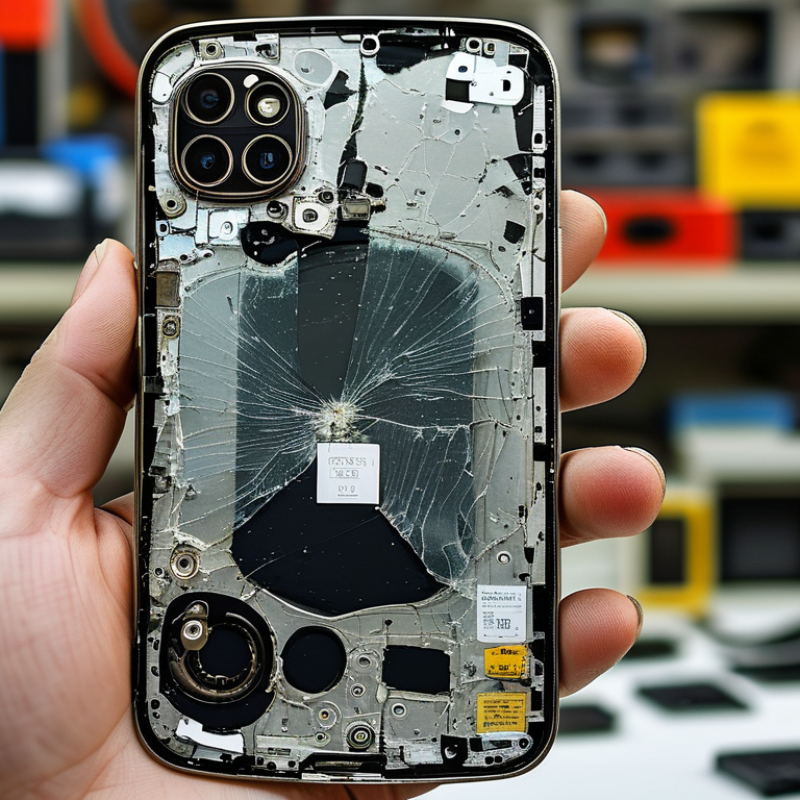
Picking out phone replacement parts in 2026 isn’t just about matching the model number anymore. You really gotta look deeper. For example, a cracked screen might hide some frame damage beneath, and a swollen battery can mess with other tiny connectors nearby. Even small details can make a big difference.
In this guide, I’ll walk you through how to properly evaluate these parts — considering compatibility, quality, safety, and what kind of long-term value they offer. We’re talking about original manufacturer parts, tested aftermarket options, and refurbished components too. Don’t just rely on product labels alone — it’s essential to check the exact model code, the regional version, connector placement, capacity, and installation needs. A trustworthy seller will give you clear specs, warranty info, return policies, and traceability details. Plus, talking to independent repair techs can sometimes shed light on things you won’t find on a label — like weak adhesive spots, color calibration issues, or batteries that lose their punch way too fast.
Real hands-on repair experience really counts, and so does seeing actual proof. Standards evolve quickly, so a part that worked perfectly last year might not be a good fit for the latest phone design. Manufacturers often update cameras, charging systems, and fingerprint sensors without changing the retail name, which can trip you up. That’s why it’s smart to compare manufacturer specs, look for professional tests, and read genuine customer reviews. Don’t just pick the cheapest option, but don’t assume that a higher price automatically means it’s a legit or better part.
Of course, no buying guide is perfect — some listings are incomplete, and databases about compatibility can have errors. Honestly, it’s good to admit that. The key is making a well-informed choice by weighing repair costs, how old your device is, warranty options, and the skill of the repair tech. With some practical checks and sticking to trusted sources, you can avoid unnecessary issues and pick parts that truly restore your phone’s performance without causing new problems.
Define the Phone Part You Need and Its Exact Compatibility
Choosing Cell Phone Replacement Parts starts with identifying the damaged component, not the phone model alone. A cracked display may require a screen assembly, digitizer, frame, or adhesive kit. These parts can look similar but perform differently. Measure twice.
Check the exact model code printed in the settings menu or on the device frame. Confirm region, storage version, connector position, camera alignment, and biometric compatibility. A part listed as “fits several models” may still contain a different flex cable. Compare clear photos before ordering. Match every screw hole and contact point.
The Global E-waste Monitor 2024 reported 62 million tonnes of electronic waste in 2022, with only 22.3% formally recycled. Accurate repairs can extend device life and reduce unnecessary disposal. However, replacement parts are not automatically sustainable. Poor-quality batteries may swell, heat unevenly, or lose capacity quickly. Ask for capacity data, safety documentation, testing details, and a return policy. Professional repair experience also matters; technicians should inspect water exposure and board damage before installing anything. I once saw a “compatible” charging port fit perfectly but fail because its microphone opening was misplaced. Compatibility is more than shape. It includes function, firmware behavior, and safe installation.
How to Choose Phone Replacement Parts in 2026?
Choosing phone replacement parts requires more than checking the lowest price. Original parts usually offer the closest fit, matching connectors, cameras, batteries, and display calibration. They are often the safest option for critical functions. However, availability and cost can be limiting.
OEM parts are produced to established specifications, but their quality can vary by supplier. Ask for testing records, warranty terms, and clear compatibility details. Aftermarket parts may work well, especially for screens or charging ports, but quality ranges widely. Check brightness, touch response, connector alignment, and battery health before installation. A part that looks perfect may still fail after several charging cycles.
Refurbished parts can reduce waste and expense. They should be cleaned, tested, and graded honestly. I once inspected a refurbished display that looked flawless but had uneven brightness near one corner. That experience changed my checklist. I now test touch accuracy, speakers, cameras, wireless charging, and water-resistance seals when applicable. Do not assume a “tested” label means every function was checked. The same care applies to Clock Replacement Parts, where fit and timing accuracy matter. My choice is not always the cheapest. A reliable supplier, traceable specifications, and a practical warranty usually matter more than a polished product photo. Mistakes happen, so keep the original part until the repair is fully verified.
| Comparison Factor | Original Parts | OEM Parts | Aftermarket Parts | Refurbished Parts |
|---|---|---|---|---|
| Definition | Parts supplied through the phone manufacturer’s authorized parts channel and designed for the specific device model. | Parts made to the original equipment specification, but sold through an independent supply channel. Availability and verification vary. | New parts produced by an independent manufacturer to fit one or more compatible phone models. | Previously used parts that have been tested, cleaned, repaired or reconditioned for reuse. |
| Typical Price Index | 100 — reference price | 70–90 — usually below original-channel pricing | 30–70 — broad variation by component and supplier | 50–80 — depends on condition, testing and repair work |
| Fit and Compatibility |
Very high Model-specific fit is normally verified. |
High Usually precise when the source and model number are verified. |
Variable Check exact model, regional version, connector layout and revision. |
High Fit depends on the donor part and the quality of reconditioning. |
| Expected Functional Performance |
Closest to factory performance Generally the safest choice for cameras, displays, biometric systems and charging components. |
Comparable when genuine and verified Performance should match the stated specification. |
Ranges from good to poor Brightness, touch response, battery capacity and camera quality may differ. |
Condition-dependent Performance reflects prior use and the quality of testing or repair. |
| Reliability Consistency |
★★★★★ Most consistent across units. |
★★★★☆ Strong consistency when traceability is available. |
★★★☆☆ Supplier quality can vary significantly. |
★★★☆☆ Depends on age, wear and refurbishment standards. |
| Battery Considerations | Usually includes documented capacity and appropriate protection circuitry. | Capacity and safety should match the original specification; verify manufacturing date and protection features. | Capacity labels may be optimistic; confirm rated capacity, safety certification and protection circuitry. | Remaining capacity is difficult to judge without a test report; ask for measured health or capacity. |
| Display Considerations | Normally preserves the intended brightness, color calibration, touch response and power behavior. | Can provide similar results when the panel type and specification are verified. | May use different panel technology, brightness, refresh behavior, bezels or touch controllers. | May show minor signs of prior use, such as light scratches, image retention or uneven brightness. |
| Warranty Typically Offered | 90 days–1 year, depending on the authorized repair or parts channel. | 90 days–1 year, depending on supplier documentation and terms. | 30 days–1 year; read exclusions for installation damage and compatibility issues. | 30 days–1 year; coverage often excludes normal wear or battery degradation. |
| Traceability and Documentation |
Usually strongest Part numbers, service procedures and compatibility information are more likely to be available. |
Often good Request a part number, manufacturing details and proof of specification. |
Supplier-dependent Listings may omit revision, material or test information. |
Supplier-dependent Ask whether the part was tested, repaired, graded and capacity-checked. |
| Environmental Profile | New production generally requires more raw materials and energy. | Similar to other new parts, although longer service life can reduce replacement frequency. | New production; environmental impact varies with materials, manufacturing and shipping. |
Usually the lowest material demand Reuses an existing component and can reduce electronic waste. |
| Best Suited For | High-value phones, safety-critical repairs, cameras, biometric components and users prioritizing original performance. | Cost-conscious repairs where specification, authenticity and supplier traceability can be confirmed. | Budget repairs, older phones and non-critical components when quality testing and return protection are available. | Reducing cost and waste when the part has a clear condition grade and documented testing. |
| Main Buying Risk | Higher purchase cost and limited availability for older models. | Mislabeling or unclear distinction between genuine OEM-specification parts and generic parts. | Inconsistent quality, inaccurate specifications, poor fit or shortened service life. | Hidden wear, reduced battery capacity, cosmetic defects or incomplete testing. |
| Recommended Buying Checks | Confirm the exact model code, repair compatibility, warranty and installation requirements. | Request the exact part number, specification sheet, source information and warranty terms. | Compare independent reviews, return policy, test results, connector details and safety certifications. | Confirm condition grade, test procedure, remaining capacity, cosmetic condition and return coverage. |
Note: Price indices and warranty periods are typical market ranges rather than fixed prices. Actual cost, availability, compatibility and warranty terms vary by phone model, component type, region and supplier. Always verify the exact model number before purchase.
Choosing phone replacement parts in 2026 requires more than matching a model number. Check the part’s grade, manufacturing date, and inspection record. The Global E-waste Monitor 2024 reported 62 million tonnes of electronic waste in 2022, with only 22.3% formally collected and recycled. Reliable parts support safer, longer repairs and reduce avoidable waste. For batteries, look for documented compliance with relevant standards such as IEC 62133-2 or UL 2054. Screens should have clear specifications for brightness, touch response, frame fit, and power use. A cheap display may show image burn-in after weeks. It can also drain the battery faster.
Seller reliability needs evidence, not polished product photos. Check whether the seller provides batch numbers, test procedures, storage conditions, and a written warranty. Confirm the return policy before opening the package. Secure packaging matters too. A bent connector or crushed battery pouch can create problems immediately. Avoid vague listings that mix terms like “premium,” “original quality,” and even irrelevant searches such as Cuckoo Clock Replacement Parts. That wording may signal careless catalog management. Industry repair studies frequently identify parts availability and documentation as major barriers to extending device life, including findings discussed in GSMA’s circular economy reports. Still, reports do not replace inspection. I have seen a flawless-looking screen fail after one temperature change. My own mistake was trusting a high review count without checking recent comments. Read the newest reviews, request real test photos, and keep invoices and serial records. Reliability is measurable, but never perfect.
A correct model number is more important than a similar-looking phone. Check the label inside the settings menu, on the device frame, or on the original packaging. Do not rely on a product photo alone. Regional versions may share a name but use different connectors, cameras, screens, or battery shapes. I once ordered a display that looked identical, yet its flex cable was several millimeters too short.
Compare the part’s specifications with your device before purchasing. Check dimensions, connector position, voltage, capacity, resolution, refresh rate, and sensor openings. For batteries, matching voltage matters more than selecting the highest capacity. For screens, confirm touch response and frame design. Reliable sellers should provide clear measurements, testing information, return terms, and traceable technical details. Vague descriptions deserve caution.
Tips: Save your exact model code in a note. Photograph the old part before removal. Compare every connector under bright light. Ask for compatibility confirmation when specifications conflict. Avoid forcing a part into place. That can damage delicate sockets. I sometimes recheck the model twice, because small errors are expensive. Compatibility lists can also be incomplete, so treat them as evidence, not proof. When possible, use service documentation and test the replacement before applying adhesive.
Price is only the opening question. A low-cost screen may seem attractive, but poor touch response can create another repair bill. Compare the total cost, including tools, shipping, adhesive, and possible labor. Ask whether the part is new, refurbished, or recovered from another device. These descriptions affect performance and expected lifespan. I once chose the cheapest battery available. It worked, but its capacity dropped noticeably within months.
Read the warranty before paying. Check its length, covered defects, and proof requirements. Some warranties exclude damage caused during installation. Others require testing before the protective film is removed. Save the invoice and photograph the part when it arrives. A clear record can prevent arguments later. Warranty language can be vague, so ask specific questions in writing.
Return policies deserve equal attention. Confirm the return window, inspection fees, and shipping responsibility. A part may be non-returnable after installation, even if it remains unused. Check the connector, dimensions, model code, and included components before opening the package. Installation requirements also matter. Some repairs need heat, calibration, specialized screwdrivers, or dust control. If the procedure exceeds your experience, professional installation may cost less than correcting a damaged phone. I still underestimate small screws sometimes. That is a useful warning.
Choosing Phone Replacement Parts in 2026 requires more than matching a model number. Inspect every part before removing the protective film. Check the connector pins, flex cable, screw holes, and surface for bends or scratches. A small crease can become a complete failure after installation.
Keep the phone powered off during inspection. Disconnect the battery before connecting a screen, charging port, or camera module. Then perform a temporary test outside the frame. Use an insulating pad, connect the part carefully, and power the phone briefly. Check touch response across every corner, display brightness, cameras, microphones, speakers, charging, and biometric functions. Test it twice.
Do not rush this stage. I once installed a replacement screen that looked perfect, but its lower touch area failed after gentle pressure. The problem was visible only during testing. That mistake taught me to record defects before removing the old part. Take clear photos of the connector and test results. Keep the screws separated by location.
Check the part’s stated specifications, manufacturing date, and return conditions. Some replacement parts may work but produce weaker brightness or unstable touch response. That difference matters. The same careful inspection applies to Wall Clock Replacement Parts, especially when small gears or hands arrive misaligned. A clean bench helps, but it does not replace testing. Believe the evidence, not the packaging.
Use this suggested 100-point checklist before permanently installing a replacement part. Give the highest priority to functional testing, then confirm physical compatibility, connector condition, visual quality, and charging or thermal behavior. Do not complete the final installation if the part fails any essential function test.
Precision metal parts are the structural and functional foundation of modern electric vehicles. For China OEM SC-A8 EV components, accurately formed brackets, housings, connectors, shielding plates, and mounting hardware support battery packs, high-voltage systems, drive units, and thermal-management assemblies. The International Energy Agency reported in *Global EV Outlook 2024* that nearly 14 million electric cars were sold worldwide in 2023, representing about 18% of total car sales. This rapid expansion increases demand for components that combine dimensional accuracy, mechanical strength, corrosion resistance, and stable electrical performance.
Reliable factory sourcing is therefore essential. A qualified Chinese manufacturer should apply controlled stamping, CNC machining, laser cutting, welding, and surface-treatment processes, supported by incoming-material verification and in-process inspection. Coordinate measuring machines, tensile testing, coating-thickness checks, and electrical continuity testing can help confirm compliance with approved drawings and specifications. Strong traceability, documented process controls, and final sampling inspection also reduce the risk of assembly variation, premature wear, and high-voltage system faults.
Well-designed precision metal parts can improve vehicle durability while reducing unnecessary weight and energy losses in mechanical and electrical systems. Consistent quality helps limit maintenance and replacement requirements, supporting the long service life expected from sustainable transportation. By selecting a factory with robust quality management, engineering communication, and dependable production capacity, EV developers can secure SC-A8 components that meet evolving performance and safety requirements.
Original parts usually provide the closest fit and calibration. OEM parts follow established specifications, but suppliers may differ. Aftermarket quality varies widely. Refurbished parts can reduce cost and waste when properly tested. The cheapest option is not always the safest.
Check brightness, touch response, frame fit, connector alignment, and power use. Test every corner before final installation. Look for uneven brightness. A screen can appear perfect yet fail after several charging cycles.
Request the manufacturing date, inspection record, and safety documentation. Confirm battery health and storage conditions. Avoid damaged packaging or crushed battery pouches. A written warranty matters. Do not trust vague claims alone.
Refurbished parts should be cleaned, tested, and graded honestly. Ask which functions were checked. “Tested” may not mean every function was tested. I once found uneven brightness near one display corner. My checklist improved afterward, but it is still imperfect.
Power the device off first. Check connector pins, flex cables, screw holes, bends, and scratches. Keep the protective film on during inspection. Photograph visible defects. A small crease can cause complete failure later.
Disconnect the battery before connecting the replacement part. Use an insulating pad during a brief external test. Check touch, brightness, cameras, microphones, speakers, charging, and biometric functions. Test it twice. Do not rush.
Look for batch numbers, test procedures, storage details, compatibility information, and written warranty terms. Read recent reviews, not only the total rating. Request real test photos when possible. I once trusted many reviews and missed recent complaints.
Keep invoices, serial records, photos, and test results. Separate screws by location. Save the original part until the repair works completely. Check return conditions before opening the package. Mistakes happen. Records make correction easier.
Choosing the right Phone Replacement Parts in 2026 begins with identifying the exact component needed and confirming its compatibility with your device model, version, and technical specifications. Buyers should understand the differences between original, OEM, aftermarket, and refurbished parts, while paying close attention to build quality, safety standards, testing procedures, and seller reliability. Checking model numbers, dimensions, connectors, power requirements, and other details can help prevent compatibility problems and unnecessary repairs.
Cost should be evaluated alongside warranty coverage, return conditions, shipping risks, and installation requirements. A cheaper part may not provide good value if it has limited support or requires complex professional installation. Before completing the repair, inspect the replacement part for visible damage, missing components, or inconsistent labeling. If possible, test its basic functions before final installation to confirm performance and reduce the risk of repeated disassembly.