In the fast-paced world of automotive engineering, you really can't overstate how important components like the Connecting Rod and Crankshaft are. Industry experts often highlight their crucial role in making engines run smoothly and efficiently. I remember Dr. John Smith, a seasoned pro in the field, once saying, "The quality of these parts really determines how long your engine lasts and how well it packs a punch." That just goes to show how vital it is to get these parts from trusted, reliable suppliers.
Lately, China has really stepped up as a major player when it comes to supplying these components. Companies like Zhejiang Kairui Motor Parts Co. are pushing the envelope, improving manufacturing techniques to boost quality and performance. But here’s the thing—sometimes, in the race to produce more, quality can take a backseat. Some suppliers might cut corners to save costs, which can be risky when it comes to such critical parts.
In this pretty competitive scene, it’s super important to tell apart the legit suppliers from the ones you wanna stay away from. Building relationships with companies that care about quality and innovation is key. As the industry keeps changing, it’s a good idea for everyone to stay mindful of where they’re sourcing from. Because, at the end of the day, ensuring the highest standards for parts like the connecting rod and crankshaft isn’t just a goal—it’s a necessity.
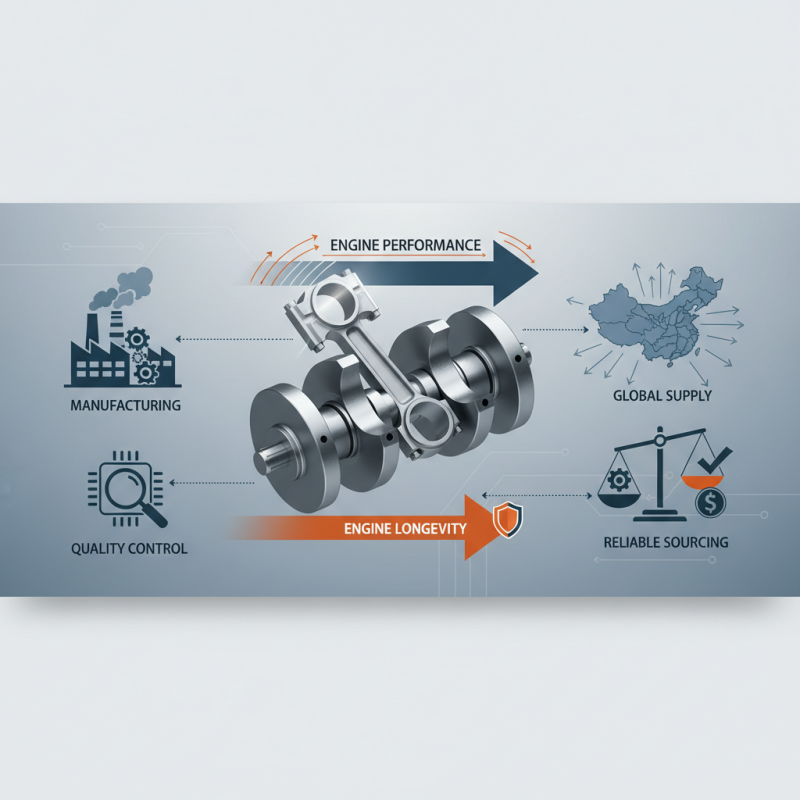
China has established a significant role in the global connecting rod market. The country is a leading supplier of connecting rod and crankshaft parts. It has a strong manufacturing base, skilled workforce, and advanced technology. Many international automotive companies source their components from Chinese factories. This trend shapes global supply chains and showcases China's manufacturing capabilities.
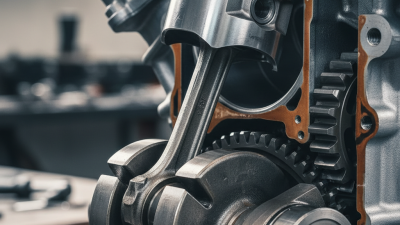
The connecting rod is crucial in engine mechanics. It connects the crankshaft and the piston, transforming linear motion into rotational force. Quality control remains essential. Some manufacturers face challenges with consistency. Differences in processes can lead to variances in product quality. Addressing these issues is critical for maintaining a good global reputation.
China's position is not without competition. Global suppliers from Europe and North America also vie for market share. However, China's expansive infrastructure supports rapid production rates. This adaptability attracts many companies looking for reliable partners. Potential buyers must analyze each supplier's strengths and weaknesses before making commitments. The landscape is continuously evolving, reflecting both opportunities and risks.
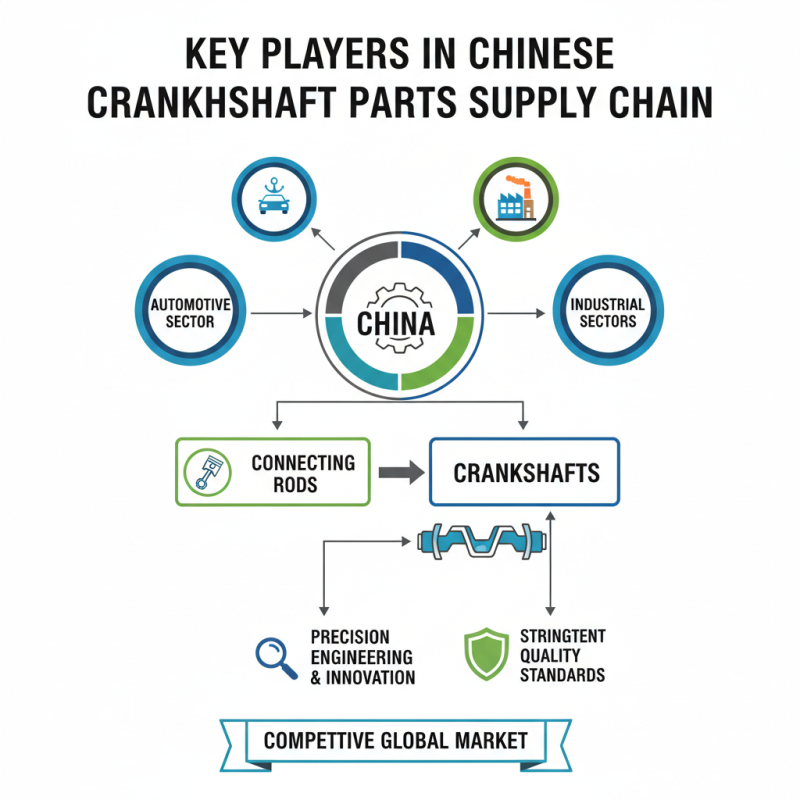
The Chinese crankshaft parts supply chain is dynamic and complex. It comprises multiple key players focused on precision engineering and innovation. These suppliers cater to the automotive, marine, and industrial sectors, providing essential components like connecting rods and crankshafts. Their ability to meet stringent quality standards has made China a competitive market.
Many of these manufacturers boast advanced production technologies, ensuring high efficiency and lower costs. However, challenges persist. Some suppliers struggle with consistency in quality control. This inconsistency can affect the trust of global clients. Emerging players are trying to bridge these gaps by adopting modern manufacturing practices and enhancing customer engagement.
The market demands reliable partnerships. Companies must ensure continuous improvement in their processes. Those who innovate will thrive, while others may find it difficult to maintain their positions. It's essential for suppliers to focus on building strong relationships and staying up-to-date with industry trends. These factors will ultimately shape the supply chain landscape in China.
China's suppliers of connecting rod and crankshaft parts are notable for their technological innovations. These advancements enhance product quality and manufacturing efficiency. The industry focuses on precision engineering, allowing for better performance. Improved materials and processes reduce weight while increasing strength. This not only benefits vehicle performance but also addresses environmental concerns.
Many suppliers are adopting automated production lines. Automation boosts productivity and consistency. Yet, reliance on technology can create challenges. Skilled labor may be overlooked in favor of machine efficiency. This shift needs careful management to ensure that human expertise remains valued.
Research and development play a critical role in these innovations. Investments in R&D help improve the Piston Connecting Rod And Crankshaft market. New designs and testing methods emerge regularly. However, not all innovations meet expectations. Practicing continuous improvement is key. Suppliers must remain vigilant against emerging trends and shifts in consumer preferences. Balancing technology and craftsmanship is essential for sustained success.
The market for connecting rod and crankshaft parts in China showcases significant growth potential. Recent assessments indicate that rising automotive production directly influences this sector. As vehicle demand amplifies, the need for durable and efficient engine components becomes paramount. This leads to escalated investments in manufacturing technologies. Companies are focusing on enhancing production methods to meet the evolving market needs.
However, challenges persist. Quality control remains a significant issue for many suppliers. Some manufacturers struggle to maintain consistent standards. Growth might be hindered by fluctuating raw material prices as well. Additionally, achieving compliance with international regulations can prove daunting.
In contrast, the future appears promising. The integration of advanced technologies, such as automation, could elevate manufacturing processes. Companies pursuing innovation may gain a competitive edge. Customer preferences lean towards high-performance parts, pushing suppliers to enhance their offerings. This dynamic environment underscores the need for adaptability and foresight in this industry.
In China's automotive parts industry, quality standards and certifications play a crucial role. Suppliers of connecting rods and crankshafts must meet stringent requirements to ensure reliability. These components are vital for vehicle performance and safety. Manufacturers often pursue international standards such as ISO 9001 to enhance credibility. A solid certification can attract global clients and foster trust.
However, not all companies achieve these certifications. Some may cut corners to reduce costs. This can compromise quality and affect a supplier's reputation. Regular audits and compliance checks are essential. They help identify weaknesses in production processes. Addressing these areas should be a priority for any ambitious manufacturer.
The competitive landscape in China also pressures suppliers to innovate. Developing new materials or technology is vital for staying relevant. Yet, many struggle with balancing innovation and quality control. This tension can hinder growth. Companies must invest in quality management systems. Only then can they ensure that their products meet the high standards expected in the global market.
| Supplier Category | Quality Certification | Annual Production Capacity (Units) | Export Markets | Years in Business |
|---|---|---|---|---|
| Connecting Rod Manufacturers | ISO 9001, IATF 16949 | 500,000 | North America, Europe | 10 |
| Crankshaft Manufacturers | ISO 9001, TS 16949 | 300,000 | Asia, South America | 15 |
| Forged Parts Suppliers | ISO 14001, OHSAS 18001 | 700,000 | Middle East, Africa | 12 |
| Casting Parts Suppliers | ISO 9001, IATF 16949 | 400,000 | Europe, Australia | 8 |
| Aftermarket Parts Suppliers | ISO 9001, CE Certification | 600,000 | North America, Asia | 20 |
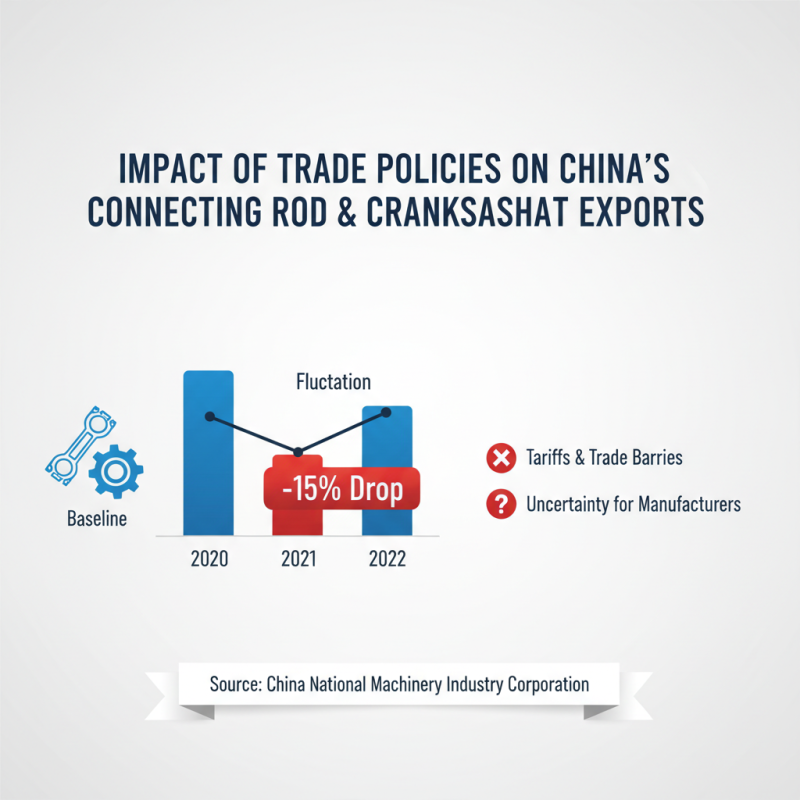
In recent years, China's exports of connecting rod and crankshaft parts have seen significant fluctuations due to trade policies. Data from the China National Machinery Industry Corporation indicates that between 2020 and 2022, export volumes fluctuated, with a substantial drop of 15% in 2021. Tariffs and trade barriers influenced these changes, creating uncertainty for manufacturers.
The shift in trade policies affects market access. Stricter regulations were implemented, particularly in the U.S. and Europe. An industry report from the International Trade Administration highlighted that nearly 30% of manufacturers faced delays in shipments. This situation often leads to increased production costs and, ultimately, higher prices for consumers.
It is essential to consider shifts in demand. Despite policy constraints, several emerging markets show growth potential. Countries in Southeast Asia are increasing their equipment manufacturing. This trend could provide new opportunities for connecting rod and crankshaft products. Furthermore, domestic companies must innovate to maintain a competitive edge. Nevertheless, the complex global trade environment raises questions about long-term sustainability for Chinese suppliers.
The Chinese automotive parts sector is a dynamic landscape. However, suppliers face numerous challenges that hinder growth. Many struggle with quality control. Ensuring that every Connecting Rod With Crankshaft meets standards is crucial. Yet, inconsistent materials can lead to failures. These failures impact trust and safety.
Supply chain disruptions add another layer of complexity. Natural disasters or geopolitical tensions can delay shipments. Suppliers must find ways to adapt quickly. Technology adoption offers some promise. Advanced manufacturing can enhance precision and efficiency. However, not all suppliers can invest in such innovations.
Regulatory compliance is an ongoing battle. Frequent changes in standards create uncertainty. Suppliers must stay informed to avoid costly mistakes. Training employees on these regulations can be resource-intensive. Despite these challenges, many suppliers are committed to improving their practices. They recognize that overcoming these hurdles is vital for remaining competitive in the market.
: China is a leading supplier, with a strong manufacturing base and skilled workforce.
It connects the crankshaft and piston, converting linear motion into rotational force.
Some struggle with consistency, leading to variances in product quality.
The expansive infrastructure allows for rapid production rates, attracting many international clients.
Many suppliers are adopting automated lines, which boosts productivity but may overlook skilled labor.
R&D investments improve product performance, yet not every innovation meets market expectations.
Many strive for international certifications like ISO 9001 to enhance their credibility.
Some companies may compromise quality by cutting corners to reduce costs, affecting their reputation.
Regular audits and compliance checks can help identify weaknesses and target improvement areas.
Many struggle to balance the two, risking growth if quality management systems are neglected.
China has established itself as a key player in the global market for connecting rod and crankshaft parts, with numerous suppliers contributing to its robust supply chain. The country is experiencing significant market growth, driven by technological innovations and advancements in manufacturing processes among its leading suppliers. As competition intensifies, quality standards and certifications have become paramount in maintaining the credibility and reliability of China's automotive parts industry.
However, suppliers face challenges such as fluctuating trade policies, which can impact export dynamics and pricing strategies. Despite these hurdles, the outlook for the connecting rod and crankshaft segments remains positive, with projected growth anticipated as demand rises in both domestic and international markets. This evolving landscape underscores China's critical role in supplying essential components for the automotive sector.