Leave Your Message
0%

You know, in the fast-changing world of manufacturing, there’s definitely been a big jump in the demand for Customized Metal Spare Parts. Companies all over are looking for parts that fit their unique needs — it’s all about boosting efficiency and performance, no matter the industry. But here’s the thing: finding a supplier who really gets it? That’s easier said than done. A lot of firms, like XYZ Manufacturing, say they can do customization, but honestly, the results don’t always live up to the hype.

Quality control? Super important. If you don’t watch out, delays can happen — often because of miscommunications with suppliers or misunderstandings about the specs. Those tiny details really matter. It’s clear that building reliable partnerships is crucial in this game.

So, if you're on the hunt for these parts, it pays to go for companies with a solid track record and credibility in customized metal parts. Doing a bit of homework before choosing a supplier might take some time, but it’ll pay off in the long run. Taking a careful, thoughtful approach means your operations stay smooth, and you’re more likely to hit your goals without a hitch.
2026 Best Customized Metal Spare Parts for Global Buyers?

2026 Trends in Customized Metal Spare Parts Manufacturing

The landscape of metal spare parts manufacturing is evolving rapidly. In 2026, customized metal spare parts are expected to cater to diverse industries, including automotive, aerospace, and machinery. According to a recent report by MarketsandMarkets, the global customized metal parts market is projected to reach $12 billion by 2026, growing at a CAGR of 7.5%. This surge reflects an increasing demand for tailored solutions that can enhance operational efficiency.

Manufacturers are integrating advanced technologies like additive manufacturing. These innovations allow for greater precision and flexibility in the production of customized automotive sleeves. However, challenges remain. Sustaining quality control during mass customization can be difficult. Many manufacturers struggle with balancing production speed and precision. Further, fluctuating raw material prices can affect project feasibility.

Sustainability is another critical aspect. Eco-friendly practices are becoming necessary in metal part production. A study by the International Journal of Manufacturing Technology highlights that 45% of manufacturers are adopting sustainable practices. This trend is crucial, yet many still rely on traditional methods. The shift is slow, and companies must rethink their approaches to remain competitive.

Key Materials Used in Customized Metal Spare Parts: A Comprehensive Overview

Customized metal spare parts play a pivotal role in various industries, including automotive, aerospace, and heavy machinery. The key materials utilized in their production significantly influence quality and performance. Steel alloys are favored for their strength and durability, often preferred for components requiring high load-bearing capacity. According to a report by MarketsandMarkets, the global steel market for specialized metal parts is projected to reach $1 trillion by 2026.

Aluminum stands out due to its lightweight and corrosion resistance, making it ideal for aircraft components. A recent study indicates that aluminum parts can reduce overall vehicle weight by 30%, enhancing fuel efficiency. Meanwhile, titanium alloys are increasingly utilized in high-performance settings, such as medical implants and aerospace applications, due to their remarkable strength-to-weight ratio and biocompatibility.

Despite the advantages, challenges exist in sourcing and machining these materials. Variability in material properties can lead to inconsistencies in production processes. Additionally, the recycling aspect is often overlooked. Using recycled metals can minimize environmental impact, yet ensuring quality remains complex. As industries evolve, a continuous focus on material innovation will be essential to address these issues and meet the specific needs of global buyers.

Global Demand for Customized Metal Spare Parts: Market Analysis 2026

The global demand for customized metal spare parts is set to grow significantly by 2026. According to recent market analyses, the industry is projected to reach a valuation of $100 billion within three years. This surge is driven by increasing needs in sectors like automotive, aerospace, and construction. Customized components provide tailored solutions, enhancing efficiency and performance.

Manufacturers face challenges in meeting this demand, primarily due to fluctuating raw material prices and supply chain disruptions. Reports indicate that 70% of companies struggle with sourcing quality materials. This uncertainty drives innovation in production processes, encouraging businesses to adopt advanced technologies like 3D printing.

Tips: Focus on understanding specific needs to create effective prototypes. Collaborating with engineers can help refine designs. Regularly assess supplier reliability to mitigate risks in your supply chain.

Impact of 3D Printing Technology on Customized Metal Parts Production

The impact of 3D printing technology on customized metal parts production cannot be overstated. According to a recent report by MarketsandMarkets, the 3D printing metal market size is expected to reach $3.2 billion by 2026, growing at a CAGR of 30.3%. This growth reflects a significant shift in manufacturing dynamics. Traditional methods often lag in flexibility and speed, whereas 3D printing enables rapid prototyping and production of intricate designs tailored to specific needs.

The precision achieved with this technology allows for complex geometries that were once impossible with conventional methods. A study from SmarTech Analysis revealed that nearly 45% of manufacturers are now adopting 3D printing to enhance their production capabilities. However, challenges remain. The costs of materials and equipment can be high. Additionally, there are concerns regarding post-processing needs and material properties. These factors require companies to carefully evaluate their choices.

As 3D printing evolves, its reliability and efficiency continue to improve. According to Wohlers Associates, the layer-by-layer fabrication method leads to less waste, making it more sustainable. Yet, the technology still requires advancements in speed and material versatility. The ongoing need for research indicates that the journey toward fully optimized production is not over. 3D printing in customized metal parts is a revolutionary trend, but challenges persist that must be addressed.

2026 Best Customized Metal Spare Parts for Global Buyers

Part Type Material Production Technique Customization Level Lead Time (Days) Estimated Cost (USD)
Gear Aluminum Alloy 3D Printing High 10 150
Bracket Stainless Steel Selective Laser Melting Medium 15 200
Housing Titanium Electron Beam Melting High 20 350
Nozzle Bronze Fused Deposition Modeling Low 7 80
Shaft Carbon Steel Binder Jetting Medium 12 120

Quality Standards and Certifications for Customized Metal Spare Parts

2026 Best Customized Metal Spare Parts for Global Buyers?

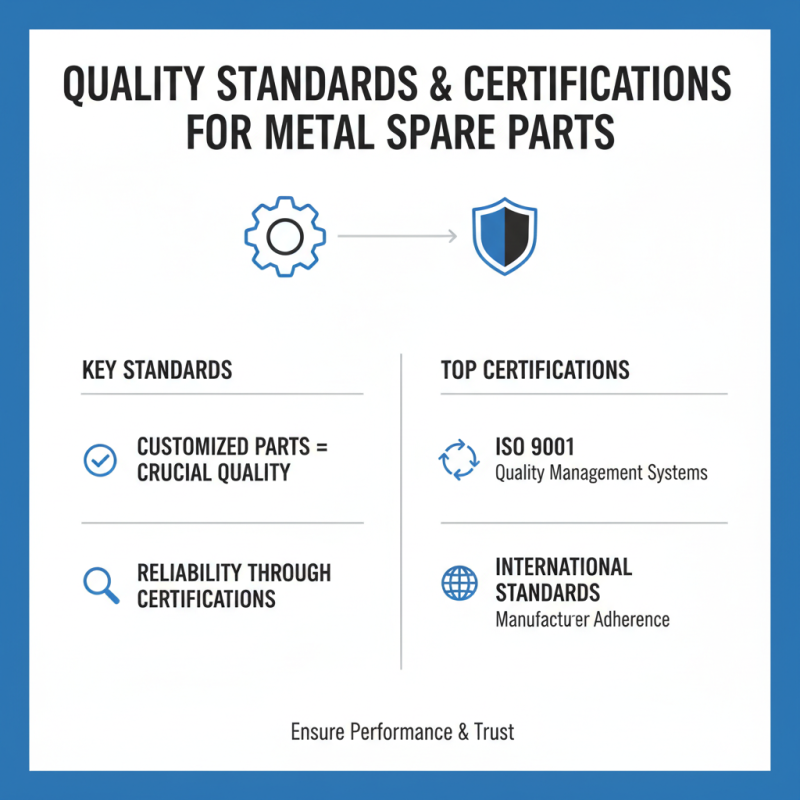
When sourcing customized Metal Spare Parts, quality standards are crucial. Buyers need to understand the various certifications that ensure reliability. Certifications like ISO 9001 focus on quality management systems. They help indicate that a manufacturer adheres to international standards.

Without these certifications, the risk increases. Poor quality metal spare parts can lead to production delays and increased costs. Buyers should verify the supplier's adherence to industry-specific standards. This ensures that the metal spare parts meet operational needs.

Understanding these standards strengthens buyer confidence. It also helps in selecting suppliers that align with project requirements. Global buyers must be diligent about the certifications presented by suppliers. Inadequate knowledge can lead to significant setbacks. Always research and reflect on the manufacturer’s compliance history before making a decision.

Innovations in Design Software for Customized Metal Spare Parts

The landscape of customized metal spare parts is evolving rapidly. Innovations in design software play a crucial role. With advancements in CAD and simulation tools, manufacturers can now create intricate designs that meet specific requirements. Research shows that the global market for such software is projected to grow at a CAGR of 8.2%, reaching $12.52 billion by 2026.

The efficiency gained through these software solutions is significant. Designers can iterate quickly, making it easier to adapt to client feedback. For instance, 3D modeling allows for a better visualization of the end product. However, reliance on technology can lead to oversight. A poorly set parameter might result in costly prototypes. Attention to detail is essential.

Moreover, as "China Metal Spare Parts" continue to dominate the manufacturing sector, the importance of integrating design software cannot be overstated. Local manufacturers are leveraging advanced technologies to improve production quality and reduce lead times. Yet, there is a fine line between automation and craftsmanship. Balancing innovation with the human touch is vital.

Supply Chain Dynamics for Global Buyers of Customized Metal Parts

2026 Best Customized Metal Spare Parts for Global Buyers?

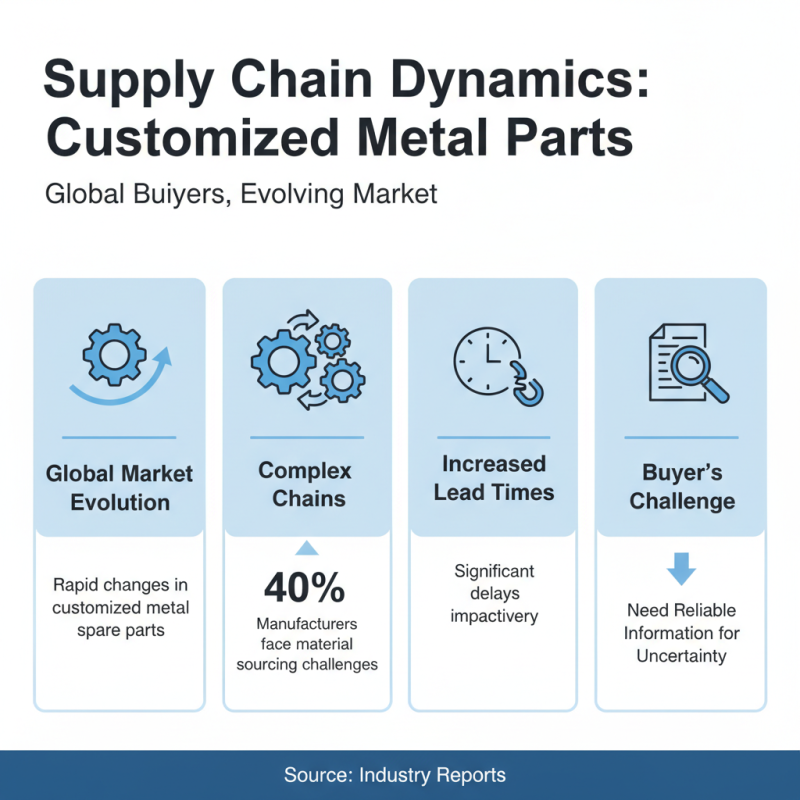
The global market for customized metal spare parts is evolving rapidly. Supply chain dynamics are increasingly complex. According to recent industry reports, over 40% of manufacturers are experiencing challenges in sourcing materials. This has led to a significant increase in lead times. Buyers need reliable information to navigate these uncertainties.

A strong understanding of the supply chain is essential. Many factors influence the availability of customized metal parts. These include geopolitical issues, fluctuations in demand, and raw material prices. Reports indicate a 15% increase in demand for customized parts over the past year. The Metal Spare Parts Factory must adapt quickly to these changes. Flexibility and responsiveness are crucial for survival in this market.

Collaboration between suppliers and buyers is becoming more important. Effective communication helps mitigate risks. However, many buyers still face transparency issues. A lack of clear information can lead to delays and unexpected costs. It’s vital for buyers to assess their suppliers carefully. This scrutiny can reveal potential risks in the supply chain. Identifying reliable partners can lead to more efficient operations and better quality products.

FAQS

: Why are quality standards important for customized metal parts?

: Quality standards ensure reliability and performance of the parts. They reduce risks related to poor quality.

What certifications should I look for when sourcing metal parts?

Look for certifications like ISO 9001. They indicate adherence to international quality management standards.

What risks come from suppliers lacking certifications?

Without certifications, there's a higher chance of receiving low-quality parts. This can lead to delays and extra costs.

How can I verify a supplier's adherence to standards?

Research their compliance history and assess previous projects. This helps ensure they meet necessary operational needs.

What trends are affecting the supply chain for metal parts?

Increased demand and geopolitical issues are causing sourcing challenges. Many manufacturers report longer lead times.

How can buyers navigate supply chain uncertainties?

Stay informed and maintain effective communication with suppliers. Understanding the market dynamics is crucial for decision-making.

What should buyers do about transparency issues with suppliers?

Assess suppliers thoroughly. Identifying potential risks can prevent delays and unexpected costs in the supply chain.

How has demand for customized metal parts changed recently?

Reports indicate a 15% increase in demand over the last year. This shift can impact lead times and sourcing strategies.

Why is collaboration important between buyers and suppliers?

Collaborative efforts improve transparency and minimize risks. Effective communication is key to better outcomes.

What should buyers consider regarding supplier flexibility?

Suppliers must adapt quickly to market changes. Flexibility can determine their ability to meet buyer demands efficiently.

Conclusion

The article titled "2026 Best Customized Metal Spare Parts for Global Buyers" explores the evolving landscape of the customized metal spare parts industry. It highlights key trends in manufacturing, examining advancements that cater to rising global demand. The discussion encompasses the primary materials utilized in production and the transformative role of technologies, particularly 3D printing, in enhancing production capabilities.

Moreover, the piece delves into the importance of adhering to quality standards and certifications, ensuring that customized metal spare parts meet rigorous requirements. Innovations in design software are also reviewed, showcasing how they facilitate improved efficiency and customization options. Finally, the article addresses the dynamics of the supply chain, providing insight for global buyers on navigating the complexities of sourcing high-quality customized metal spare parts.

Ethan

Ethan

Ethan is a dedicated professional at Dongguan Shouci Hardware Products Co., Ltd., where he excels as a marketing specialist. With a profound understanding of the company’s offerings, Ethan is committed to enhancing customer engagement through expertly crafted content. His role involves regularly......
Previous 2026 Top Aluminum Connecting Rods What You Need to Know?