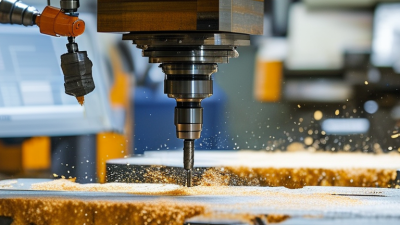
Picking out the best Cnc Processing Center in China isn’t just about comparing spindle speeds or specs. Honestly, a lot of the story happens on the shop floor. You wanna listen to how the spindle sounds when it’s working hard, check out the finish inside those milled pockets, and see if the same part still hits the right tolerances after hours of running. It’s also smart to take a peek at the control systems, how easy it is to get to different parts for maintenance, the tooling options they offer, and whether the supplier can actually support you through setup and beyond. Sometimes, those small details make all the difference.
I’ve read plenty of work from manufacturing expert Dr. Yoram Koren, especially about flexible manufacturing. While I’m not quoting him directly here, a good way to think about it is: ‘Find a machine that actually fits into your production system, not just one that looks good on paper.’ That little insight helps you tell the difference between a machine that’s just capable and one that’s actually a smart investment. For example, a high-speed model might wow you during a demo, but if your shop runs a variety of parts and needs frequent changeovers, it might not be the best fit.
In this guide, we’re comparing Chinese manufacturers based on clear, measurable stuff—like machining accuracy, build quality, how ready they are for automation, technical support, and proven performance data. But it’s also worth digging into the less shiny questions. Can the machine reliably bore holes? Are replacement parts easy to get? How fast can an engineer figure out what’s wrong if something breaks? No single machine is perfect for every factory out there. Some specs need a closer look, really. The best Cnc Processing Center is the one that matches your workload, operator skills, and long-term support needs—no more, no less.
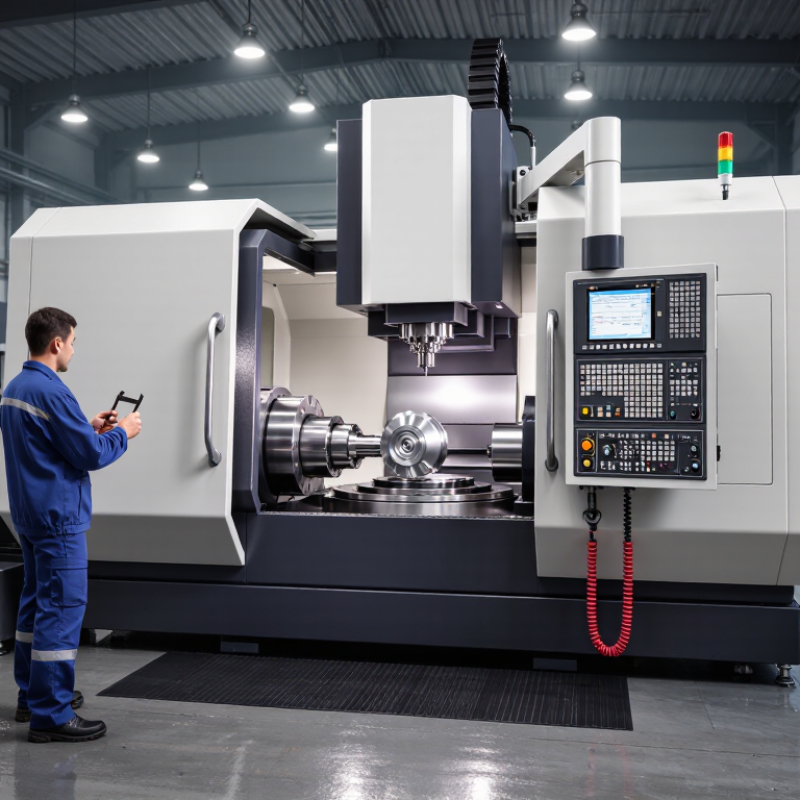
A CNC machining center is a computer-controlled machine that removes material with rotating cutting tools. Its core parts include a spindle, worktable, enclosure, and automatic tool changer. Unlike a basic mill, it can switch tools without stopping for manual changes. Common operations include face milling, drilling, boring, tapping, and contour cutting. Some machines also index or rotate the workpiece, allowing several sides to be machined in one setup. This can reduce handling, though it does not guarantee accuracy; setup and tool condition still matter.
The International Federation of Robotics reported 4,281,585 industrial robots operating in factories worldwide in 2023, in its World Robotics 2024 report. That figure describes industrial robots, not CNC centers, but it reflects the wider move toward automated production. In practice, a China Cnc Processing Center may run unattended between tool changes, while an operator checks chip buildup, coolant flow, and the first finished part. Small details matter. A dull tool can leave visible marks or push dimensions out of tolerance.
Tips: Confirm the required materials, work envelope, spindle speed, and positioning accuracy before comparing machines. Ask for a trial cut using your actual part geometry. Check the measurement results, not just the machine’s specification sheet. Real shop conditions can be messier. One test is useful, but production consistency deserves a closer look.
What Is the Best Cnc Processing Center in China?
How China’s Machine-Tool Industry Classifies 3-, 4-, and 5-Axis Centers
In China, a machining center is often classified by the number of controlled axes, not by a simple quality ranking. A 3-axis center moves the cutting tool along X, Y, and Z. It suits flat faces, pockets, and many drilled features. A 4-axis machine adds a rotary axis, letting operators reach several sides with fewer manual repositionings. A 5-axis center adds another rotary movement, allowing complex angles and curved surfaces in one setup. Setup still matters.
The distinction affects accuracy, cycle time, and part access. Fewer setups can reduce handling errors, but 5-axis equipment also demands skilled programming and careful calibration. More axes are not automatically better. Gardner Intelligence’s 2023 World Machine Tool Survey reported China’s machine-tool consumption at about US$27.1 billion in 2022, reflecting the scale of its manufacturing market. That figure covers machine tools broadly; it does not rank centers by axis count. For buyers comparing Cnc Processing options, the useful question is whether the part’s geometry justifies the added motion. A simple bracket may need only three axes. A turbine-like contour may benefit from five. I would still check fixture access and tolerance requirements before choosing.
How China’s Machine-Tool Industry Classifies 3-, 4-, and 5-Axis Centers
These are typical configurations: 3-axis centers use three linear axes, while 4- and 5-axis centers add one or two rotary axes. Specific machine designs vary, and axis count alone does not determine which center is best for a job.
A CNC processing center is best judged by matching spindle speed and work envelope to the parts it will actually cut. Compact 3-axis machines often provide around 500 × 400 × 400 mm of X, Y, and Z travel, with spindles near 8,000–12,000 rpm. That suits smaller housings, plates, and fixture work. Check the measurement units and machine specifications carefully; quoted travel is not always the usable cutting space.
General-purpose vertical centers commonly offer about 800 × 500 × 500 mm of travel and 8,000–12,000 rpm. High-speed models may reach 15,000–24,000 rpm, useful for smaller tools and aluminum finishing. Heavy-cutting machines may run closer to 6,000–10,000 rpm but deliver more torque for larger cutters. More speed is not automatically better. Tool balance, material, and cutting load matter.
Measure the part with its fixture installed. A vise, rotary table, or tall workpiece can consume valuable clearance. Check table load, spindle-to-table distance, and tool-change limits alongside X/Y/Z travel. These details reveal whether a machine can handle a real job, not just a catalog example. I would also ask for test-cut results; specifications alone can feel reassuring, but sometimes they leave important questions unanswered.
A CNC machining center can cut a perfect-looking test piece and still miss its commanded positions. ISO 230-2:2014 provides a repeatable method for measuring this behavior on numerically controlled axes. Its test procedure samples multiple positions along the axis and measures approaches from both directions. The resulting data includes positioning deviation, reversal error, and repeatability.
Small errors matter. A few micrometres can affect hole spacing or the fit of a precision component.
The standard’s test results help buyers compare machine specifications with measured performance, rather than relying on brochure claims. Check the test conditions, measurement equipment, and reported values; results depend on how the test is conducted. ISO 230-2:2014 is the technical reference for interpreting these axis-positioning measurements.
A strong result is useful, but it does not guarantee accuracy under every cutting load or shop-floor temperature. That part is easy to overlook. Ask for the test record, then consider a trial cut on the material and geometry your work actually requires.
Choosing the best CNC machining center means checking measurable performance, not relying on a polished sales claim. The ISO 10791 series sets test methods for machining centers, including geometric accuracy, axis positioning, repeatability, and cutting performance. The relevant tests depend on the machine’s configuration. A technician may check whether an axis returns to the same point, then compare results with stated tolerances. Small details matter.
Tips: Request the specific ISO 10791 test report, including test conditions, measurement equipment, and results. Ask whether the machine was tested warm or cold; temperature can affect readings.
ISO 10791 evaluates performance, but it does not by itself certify a machine as safe. Inspect physical guards, door interlocks, emergency stops, and clear operating instructions. Confirm that safety checks follow the applicable requirements for the machine and its intended use. A Cnc Processing Factory should be able to explain both its accuracy evidence and its safety procedures. Reports are useful, but they cannot replace a careful review of the actual machine. I would still question results that lack setup details or repeat measurements.
When comparing Chinese CNC processing centers, match the machine to the parts you actually make. A brochure’s positioning accuracy figure is only one clue. Ask whether it describes positioning accuracy or repeatability, and under what test conditions. Request recent inspection records, such as a laser positioning report, and check how the machine performs after warming up. Numbers need context.
Capacity means more than table size. Confirm the usable X, Y, and Z travel, table load, tool capacity, and the space needed for fixtures. A heavy casting may fit on the table but exceed its safe load. Ask about chip removal and coolant delivery, too; poor access can slow production even when the machine’s specifications look strong.
Application should guide the final choice. Aluminum parts may need high spindle speed and effective chip evacuation, while steel components may benefit from rigidity and torque at lower speeds. Match the spindle, tool changer, and control functions to your materials and cycle times. A reliable Cnc Processing Supplier should explain these trade-offs and provide a sample machining plan. I would not accept a single test cut as proof; it is useful, but repeatability across shifts matters more.
It is a computer-controlled machine that removes material with rotating tools. A spindle, worktable, enclosure, and automatic tool changer support its work.
Common tasks include face milling, drilling, boring, tapping, and contour cutting. Some machines rotate or index parts to reach several sides in one setup.
It switches tools without requiring manual changes between operations. The machine may keep running, but an operator still needs to check chips, coolant, and the first finished part.
Compact machines often run around 8,000–12,000 rpm. High-speed models may reach 15,000–24,000 rpm for small tools and aluminum finishing. Heavy cutting may need more torque, not more speed.
Compare its X, Y, and Z travel with the part and fixture installed. A vise or rotary table can reduce usable clearance. Check table load and spindle-to-table distance, too.
It records how closely an axis reaches commanded positions, including deviations, reversal error, and repeatability. Measurements from both directions can reveal small positioning differences.
No. Test conditions, measurement equipment, cutting loads, and shop temperature can affect results. A few micrometres may matter. I would still ask for a trial cut.
Use your actual material and part geometry. Check measured dimensions, hole spacing, and visible tool marks. Specifications can look tidy; shop floors rarely are.
Choosing the best CNC Processing Center in China depends on the work it must perform, not simply on its number of axes or maximum spindle speed. A machining center combines computer-controlled movement with operations such as milling, drilling, and boring. Three-axis models suit many straightforward parts, while four- and five-axis centers can machine more complex shapes and reach multiple surfaces with fewer setups. Spindle speed, tool capacity, and the machine’s work envelope should be compared against the material, part dimensions, and required production volume.
Reliable comparison also requires attention to verified performance. ISO 230-2 provides methods for measuring linear and rotary axis positioning accuracy and repeatability, while ISO 10791 covers tests for machining-center performance and related safety considerations. These evaluations help distinguish stated specifications from measured capability. The most suitable center is therefore the one whose accuracy, capacity, and tested performance match the application, while supporting consistent operation and the required level of productivity.